 English
 Russian
 French
 Spanish
 Portuguese
 Arabic
 Vietnamese
 Turkish

Alloy
A high-tech enterprise focusing on the development and application of X-ray technology products, committed to becoming a leading supplier of X-ray industrial testing solutions.
A Buyer's Guide to XRF Analyzers: 5 Key Features You Can't Afford to Overlook
Investing in an X-ray fluorescence (XRF) analyzer is a significant decision that can transform your quality control, material sorting, or exploration processes. With the ability to deliver rapid, non-destructive elemental analysis, these instruments are powerful tools . However, with various models on the market—from handheld units for field use to precision benchtop systems for labs—choosing the right one can be complex . The analyzer with the most features isn't always the best fit for your specific needs .
To help you make a confident investment, we’ve distilled the technical specifications down to five key features you can’t afford to overlook when buying your next XRF analyzer.
1. The Detector: PIN vs. SDD—The Heart of the Instrument
The detector is arguably the most critical component of any XRF analyzer. It’s responsible for capturing the fluorescent X-rays emitted from your sample and determining their energy. The type of detector directly impacts the analyzer's speed, sensitivity, and the range of elements it can accurately measure .
There are two main types you'll encounter:
PIN Detectors: This is an older, more established technology. PIN detectors are slower and have poorer energy resolution compared to their modern counterparts .
Silicon Drift Detectors (SDD): SDDs are the current standard for high-performance analyzers. They offer superior resolution and can handle much higher count rates, which translates to faster analysis times and better sensitivity .
Why you can't overlook this:
Your choice here dictates your analyzer's capabilities. If your work involves measuring light elements like magnesium (Mg), aluminum (Al), silicon (Si), phosphorus (P), or sulfur (S), an SDD is not just an option; it's a necessity . The superior resolution of an SDD allows it to separate the energy signals of these elements from the background noise and from each other .
2. The X-Ray Tube: Anode Material and Power
The X-ray tube is the source of the excitation, and its design, specifically the anode material, determines which elements it can efficiently excite. Common anode materials are rhodium (Rh), silver (Ag), and tungsten (W) .
While less frequently cited in buyer specs, the tube's power (measured in watts) also plays a role, especially when comparing handheld to benchtop units. Benchtop analyzers typically operate at higher power, providing greater stability and sensitivity for complex lab-based tasks .
3. Form Factor and Sample Handling: Matching the Tool to the Task
Will you be climbing a mountain to survey a mining claim, or will the analyzer reside permanently on a bench in a clean lab? The answer to this question dictates the ideal form factor .
Handheld XRF: These portable units are designed for in-situ analysis. They are rugged, lightweight, and allow for rapid, on-the-spot decision-making, revolutionizing fields like exploration and scrap sorting .
Benchtop XRF: These systems are designed for maximum precision and stability in a laboratory environment. They often feature larger, more configurable sample chambers .
4. Collimator and Optics: Focusing on the Right Spot
The collimator is the component that shapes and limits the X-ray beam, directing it onto your sample . It determines the exact spot size you are analyzing.
Why you can't overlook this:
Choosing the right collimator size is a balancing act.
If the collimator is too large, the X-ray beam may extend beyond the area you intend to measure. For example, if you're analyzing a small weld seam or a tiny electronic component, a beam that's too wide will also pick up signal from the surrounding material, corrupting your result .
If the collimator is too small, you'll be analyzing a very tiny spot. To get a result that's statistically representative of the whole part, you may need to increase the measurement time significantly .
5. Software, Data Management, and Connectivity
Hardware gets the results, but software turns them into decisions. A powerful, intuitive interface and robust data management capabilities are just as important as the detector inside the box .
Why you can't overlook this:
Modern XRF analyzers can generate vast amounts of data quickly . How you handle that data is crucial.
Ease of Use: The software should guide the user from measurement to decision with minimal steps. Look for features like grade libraries for sorting, or specific application modes for things like RoHS screening or geochemistry .
Advanced Functionality: Can the software be used for root cause analysis? A qualitative mode can help identify unexpected contaminants . Can it create elemental maps of a sample surface to check for coating uniformity? .
Data Integrity and Connectivity: In today's connected world, seamless data transfer is a must. Features like wireless connectivity, direct export to USB drives, and cloud-based fleet management systems are game-changers . These systems can automatically upload test results, allowing for remote monitoring of data quality and device health. They push software updates and even help troubleshoot issues in real-time, minimizing downtime and ensuring data integrity across an entire fleet of analyzers .
Carrying forward a proud legacy, the EulerX 900S series handheld analyzer performs fast, accurate, non-destructive analysis for applications like alloy grading, QC, scrap recycling, precious metals, and PMI. Its advanced technology delivers lab-quality results in seconds with no preparation and minimal training. Designed for simplicity and portability, it's the ideal tool for on-site inspection of raw materials, finished parts, and work-in-progress.
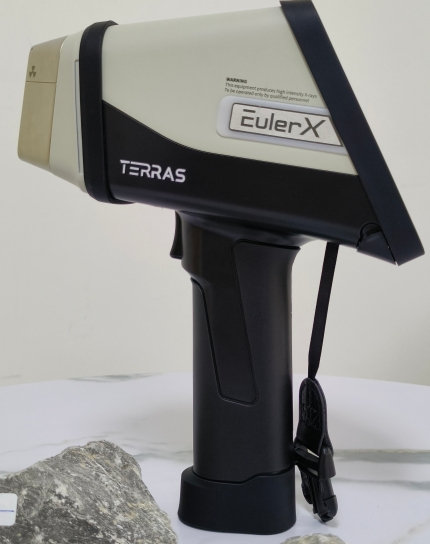
Terras EulerX900S Handheld Alloy Analyzer
Making Your Choice
Selecting the right XRF analyzer is about aligning the technology with your real-world needs. By focusing on these five key features—Detector, X-ray Tube, Form Factor, Collimator, and Software—you can move beyond the marketing hype and choose a tool that delivers accurate, reliable data and a strong return on investment for years to come.
About Terra Scientific
Terra Scientific is a high-tech manufacturer specializing in the development and application of X-ray technology products. We are committed to becoming a world-class provider of X-ray industrial inspection solutions. Terra Scientific currently offers a range of products to global customers, including handheld alloy analyzer, handheld precious metal analyzer, handheld mining analyzer, benchtop precious metal analyzers, in-line analyzer, and spectrometer modules, along with XRF analyzers. We continuously serve global clients in fields such as mechanical manufacturing, metal processing, aerospace, petrochemicals, mining and geology, food safety, environmental protection, and scientific research.
To learn more, please don't hesitate to contact us via email at sales@terra-scientific.com, or visit our website at http://www.terra-scientific.com
Join Us
Subscribe to our email list for updates & promotions.